
Chapter 06 of 10 · Under the loupe

Fabric& Details

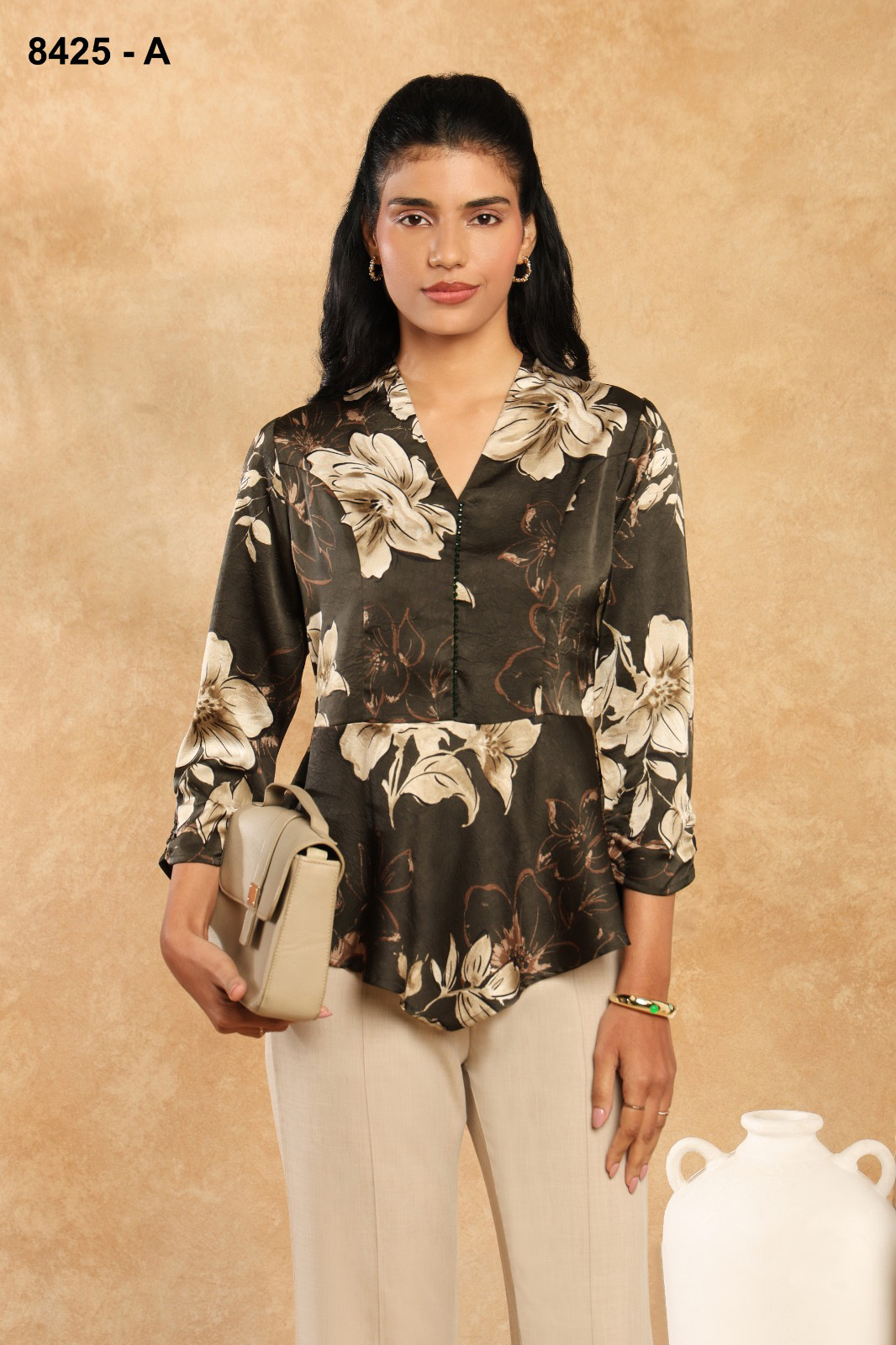
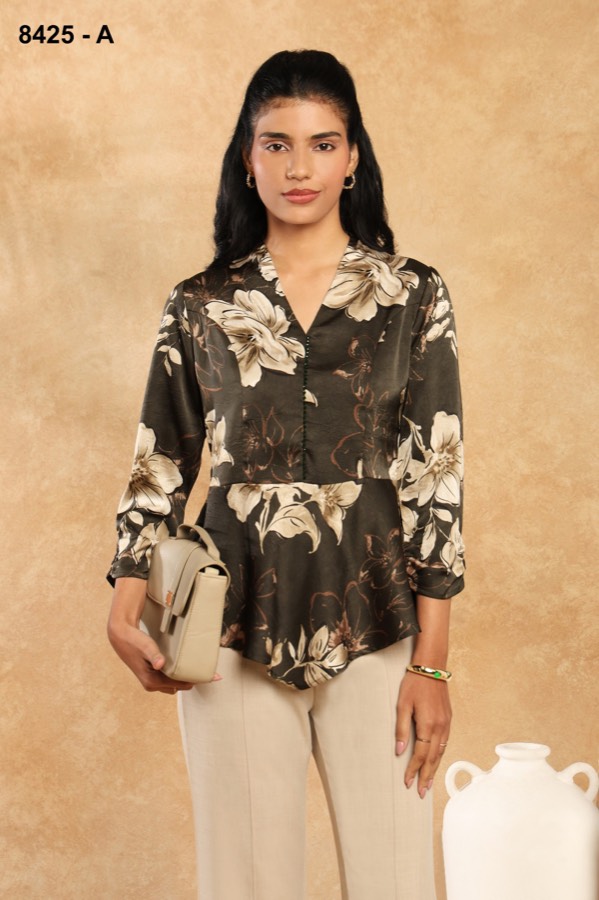
Woman in an olive-black satin-finish peplum top with a large cream lily print, V-neckline and three-quarter sleeves, holding a small bag — women's printed peplum top
  1. 1
  2. 2
  3. 3
  4. 4
  5. 5
Specimen — a satin-finish peplum top with a lily print. Tap a number to read the detail.

Up close, a top tells you everything: how light lands on its surface, how the cloth falls from the shoulder, how carefully its edges are finished. This chapter reads one garment under the loupe and builds a vocabulary for all the others.

A note on honesty: we describe how fabrics look and move. Fibre content and care vary from piece to piece — always check the garment label, or ask in store.

Macro view of a lustrous satin-finish surface catching the light across a cream lily print
×3.4 · sheen

Detail 01

Fabric appearance

The first impression of any fabric is how it handles light. A lustrous, satin-like surface reflects it, giving colours depth and a dressed-up glow — the reason sheen is associated with evening. A matte surface absorbs light, reading calm, natural and everyday. Between them sit soft-sheen finishes that feel polished without shining. When choosing a top, decide first how much light you want it to hold.
Detail 02

Texture

Texture is the surface you can see before you touch it: the slub of a woven cotton, the grain of linen-look cloth, a crinkled or crushed finish, a ribbed knit, the smooth flatness of a satin weave. Texture adds interest to solid colours — a textured top in a single shade can be as engaging as a print. Combine textures thoughtfully: a smooth top with a textured trouser, or the reverse, creates quiet contrast.

Close-up of a peplum waist seam where fluid fabric releases into soft folds
Peplum seam · fluid release

Detail 03

Draping

Drape describes how a fabric falls under its own weight. Fluid cloth — like the specimen here — slides into soft folds and moves as you walk; at the peplum seam it releases from the waist into gentle waves. Crisper cloth holds a shape away from the body, creating structure and volume. Fluid drape flatters wrap fronts, cowls and peplums; crisp fabric suits collars, pleats and tailored shirts.

Detail 04

Surface details

Beyond the fabric itself, a top can be enriched with surface treatments: pin-tucks and pleats, contrast piping, topstitching, lace inserts, smocking and pressed creases. These details add depth and craftsmanship. Fine vertical piping on a band-collar top, for instance, lends a tailored quality — you can see this in our workwear story.

  • Pin-tucks
  • Piping
  • Pleats
  • Topstitching
  • Smocking
  • Lace insert
  • Yoke
Close-up of large cream lilies on an olive-black ground with an asymmetric hem
Large-scale lily motif

Detail 05

Prints & patterns

Prints are read by scale, density and contrast. The large cream lilies here are high-contrast against a dark ground and widely spaced, so the print reads bold and painterly. A small, dense print in close colours reads almost like a texture from a distance. Placement matters too: engineered prints, borders at the hem or sleeve, and panels that change pattern across the body all create intentional focal points.

Pattern families: florals · stripes · polka dots · geometrics · abstract brushwork · animal-inspired · paisley · heritage and folk motifs.

Detail 06

Embellishment

Embellishment adds a decorative layer: line embroidery, thread-work motifs, appliqué flowers, mirror-work, sequins and beading. Used sparingly — a single appliqué at the shoulder, a trail of embroidered flowers across the front — it gives a top a handcrafted quality and makes it suitable for special occasions. When a top is embellished, let it lead: simple bottoms, light jewellery.

See line embroidery on a puff-sleeve top in the Sleeve Directory, and a floral appliqué in The Silhouette Story.

Macro view of a clean V-neckline edge on a printed satin top
V edge · clean facing

Detail 07

Neckline finishing

How a neckline is finished determines how crisp it looks. A facing turned to the inside gives a clean, invisible edge; binding wraps the edge in a narrow strip, sometimes in a contrast colour; piping outlines it; a placket or collar adds structure. A well-finished V lies flat against the body without gaping — one of the clearest signs of a well-made top. Explore shapes in the Neckline Index.

Detail 08

Sleeve finishing

The sleeve end is a small canvas: a plain turned hem, a buttoned cuff, an elasticated or gathered edge, a printed border, a tie, a slit, a ruffle. On the specimen, the three-quarter sleeve finishes neatly above the wrist, leaving room for a bracelet. A deep cuff signals polish, a gathered hem signals softness, and a bordered edge brings print to the extremity of the look.

Close-up of a three-quarter sleeve end and gold bracelet at the wrist
Sleeve end · bracelet room

Detail 09

Buttons & closures

Closures are functional details that shape the character of a top. A full button placket — hidden or visible — makes a shirt; a short placket of two or three buttons creates a henley-style V; tie fronts and wrap closures replace buttons altogether; a single loop and button at the back of the neck keeps a high neckline clean. Covered and self-fabric buttons look refined; contrast buttons become a feature.

Look closely at the short buttoned placket on the rust top in the Neckline Index, the tie neck in the Tops Collection, and the wrap fronts throughout The Edit.

Look closer, choose better.

Before choosing a top, read it as we have here: the surface, the drape, the edges, the closures. The details that are hardest to notice are often the ones that make a top feel special for years.

Continue to The Occasion Edit
Next · Chapter 07The Occasion Edit